

CRM data integration in digital advertising
We use CRM data integration to turn your Google Ads, Meta (Facebook), TikTok, LinkedIn, and AI-powered digital campaigns into smarter, more precise systems that reveal your audience and their true intent.




CRM data–driven advertising can increase its effectiveness by more than 40%
CRM data integration in marketing is part of our everyday work. Since 2022, we have invested more than €100,000 in developing technologies and methodologies for CRM data integration.
We have built automated solutions that combine data from websites, internal company systems, advertising platforms, Google Analytics, and various CRM systems.
These integrations enable AI to more quickly and accurately identify your potential customers and deliver more personalized advertising to them. Our solutions unlock significantly broader opportunities to create highly targeted communication, increase customer engagement, and achieve higher returns on advertising investment (ROAS).
Over 60% more accurate resource allocation with CRM data integration

by identifying high-value customer profiles

by handling fewer low-quality and more high-quality leads

by more precisely segmenting target audiences by interests and delivering more personalized ads

by seeing the profitability of different ads and choosing where to invest for the best results

by seeing the actual return on investment, LTV, and revenue by traffic source

by understanding lead-to-sale dynamics across different periods in B2B and other business sectors
Artificial intelligence in digital advertising becomes truly powerful only when it is fueled by clean, real, and high-quality data. CRM systems store valuable information about customers – inquiries, purchases, and interactions – which can be leveraged to improve the accuracy, efficiency, and profitability of advertising campaigns.
CRM data integration in marketing enables you to reach your audience more precisely, drive sales, and increase brand visibility where your customers actually are. However, success depends not only on launching campaigns, but on a continuous process driven by analysis, testing, and optimization.
At Raibec, we build and manage advertising campaigns across Google Ads, Meta Ads, and other channels such as TikTok, Pinterest, and LinkedIn, all based on data rather than assumptions. We believe that digital advertising must be measurable, strategic, and continuously improved.

The result is more targeted campaigns, higher conversion rates, and significantly stronger return on investment.By using CRM data in marketing, campaign accuracy and efficiency can increase by 30–50% or even more.
Example
If your monthly advertising budget is 2000 EUR and the integrated system increases efficiency by at least 20%, that means a saving of 400 EUR every month, or as much as 4800 EUR per year.
0
€
Monthly advertising budget
+
0
%
Integrated system efficiency
0
€ per mėn.
Budget saved
CRM data integration in marketing has three levels
The higher the level of CRM data integration, the more accurately and effectively AI in Google Ads, Meta, and TikTok campaigns can identify potential users – in other words, likely buyers.
Level 1
CRM data integration in marketing takes place when audience data is imported from a CRM system into platforms such as Google Ads, Meta Ads, or other advertising systems.
Different types of user lists can be uploaded to these platforms – existing customers, potential customers, incoming leads, or contact data (emails, phone numbers, addresses). Based on this data, advertising platforms can distinguish between users who are already your customers, those who are potential customers, and those who are actively searching for a product or service provider.
Level 2
More advanced CRM data integration in marketing allows systems to receive not only contact data, but also specific events and lead statuses from the CRM.
For example, the following signals can be shared:
a lead becomes a sales opportunity,
a lead is deleted,
a sale is completed,
a deal is lost.
At this level, advertising platforms can better understand user quality and their readiness to purchase.
They can not only identify users who are closest to making a purchase decision, but also find new audiences with similar behavior – even if you have no prior data about them.
This means you can reach not only users who already know your brand, but also those who have never interacted with you before, yet are actively exploring similar products or services.
Level 3
The most advanced level of CRM data integration in marketing enables AI systems to access detailed data about customer purchases – including products bought, their prices, and quantities.
Based on this data, advertising platform algorithms can:
calculate each customer’s lifetime value (LTV – Lifetime Value),
assess the importance of each customer to the business,
predict future purchasing behavior.
At this level, platforms such as Google Ads, Meta, and TikTok can segment users not only based on behavior, but also on the value they generate.
They can:
distinguish between high-value and low-value customers,
identify wholesale vs. retail buyers,
differentiate one-time buyers from loyal, long-term customers,
understand what types of products a user is likely to purchase.
As a result, advertising systems can segment audiences far more precisely and optimize campaigns based on real business value, rather than just surface-level actions.
CRM data integration with Google Analytics
gives marketing superpowers
For B2B and other service-based businesses focused on lead generation, websites and Google Analytics are often unable to identify which traffic sources actually generate revenue. As a result, it becomes difficult to assess the true value of leads coming from specific channels, campaigns, or ads.
This lack of visibility makes it hard to make informed decisions about which traffic sources to prioritize and where to invest more. It also becomes unclear which campaigns are profitable, which are loss-making, and which deliver the highest return.
At the same time, advertising AI lacks the ability to understand the real business value or revenue generated from those leads. As a result, campaigns often produce a high volume of low-quality leads, waste advertising budget, and consume your team’s time and resources in the process.
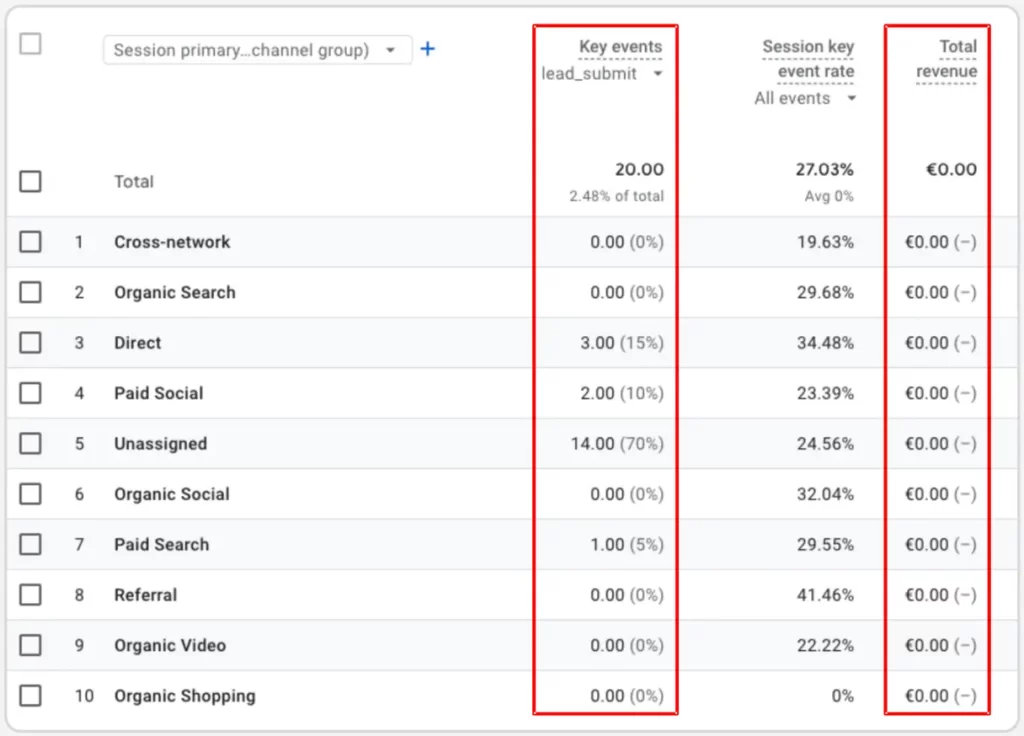
Result you can expect from CRM data integration
By using CRM data integration with Google Analytics, your business analytics starts to function like e-commerce.
Every lead generated through your website is connected to actual revenue. This allows you to clearly see the ROAS generated by each marketing traffic source – from individual ads and campaigns to SEO, GEO, email, and social media activities.
You gain full clarity on which marketing channels are worth investing in and which actions still require optimization. At the same time, advertising AI gains a deeper understanding of which users have the highest potential to become your next loyal and valuable customers.
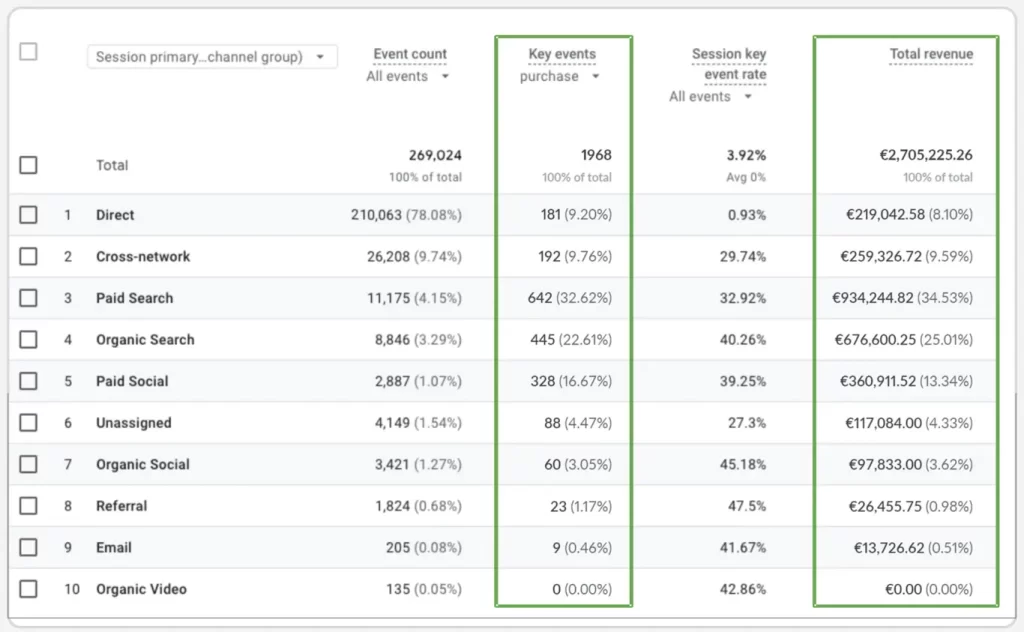
Do you want to learn more about using CRM data integration in digital advertising campaigns?
During the first conversation, we will review your current actions and suggest targeted steps for growth.
CRM Data Integration: Frequently Asked Questions
What types of businesses is CRM data integration suitable for?
CRM data integration solution is especially well suited for businesses whose primary goal is not direct online sales, but the generation of high-quality inquiries. This includes medical service providers and clinics, construction companies, manufacturers of custom products, and various B2B service providers. These businesses typically do not operate e-commerce stores; instead, their websites are designed to attract potential customers and generate qualified inquiries. Integrating CRM data makes it possible to identify which channels deliver real business value and to optimize advertising so it generates more profitable, high-quality leads.
Is this solution suitable for all CRM systems?
Yes, this solution can be adapted to most widely used CRM systems, including HubSpot, Salesforce, Pipedrive, Zoho, and others. The key requirement is that the CRM supports data export or integration via an API or other integration methods. If you use a less common or custom-built CRM, the solution can still be adapted, although additional technical work may be required. Our team evaluates each case individually and ensures that data is integrated securely and seamlessly.
Which content management systems (CMS) are supported for CRM integration?
CRM integration does not depend on which content management system your website is built with. Integrations can be implemented with any CMS, as long as data transfer is technically possible (via forms, APIs, or other integration methods).
How much does CRM data integration into AI-powered advertising cost?
The cost of CRM data integration starts from €400, with the final price depending on:
the systems you use (CRM, advertising platforms, analytics tools),
your data structure,
and the overall complexity of the integration.
From a practical perspective, we recommend looking at it this way:
if the cost of integration is lower than the portion of your marketing budget currently being wasted due to poor data quality and low targeting accuracy, then the investment is almost always worth it.
Why is CRM data integration with Google Analytics necessary? Isn’t data transfer to ad platforms enough?
In most cases, transferring data only to advertising platforms is not enough to achieve maximum performance.
Integration with Google Analytics allows you to:
collect additional data on user behavior on your website,
enrich AI learning signals,
and identify user intent much more accurately.
At the same time, both you and your marketing team gain a clear, centralized view of marketing performance within a single analytics platform, making it easier to evaluate results and make better data-driven decisions.
Is it possible to integrate with a custom order management or internal system instead of a CRM?
Yes, it is possible.
If your organization uses a custom-built internal system and its developers can make modifications, we can implement integrations by collaborating directly with them.
In such cases, we:
prepare clear technical implementation guidelines,
coordinate the integration process,
and verify that data flows correctly and the system functions as intended.
How much can I save on advertising with CRM data integration?
This depends heavily on your specific situation, which is why we always recommend a personalized consultation.
However, CRM data integration tends to deliver the biggest impact if:
you receive a high volume of low-quality leads and want to reduce them;
your Google, Meta, or other ad campaigns are underperforming;
your monthly ad spend exceeds €400.
Even a 10% improvement in advertising efficiency can allow the integration investment to pay for itself very quickly. If 10% of your ad budget is already a meaningful amount, the long-term return can be significant.
I don’t use a CRM — only Google Sheets or Excel. Is it still worth implementing a CRM?
Google Sheets or Excel can be a good starting point, but they cannot match specialized CRM systems, especially when it comes to AI-driven advertising and data integrations.
CRM systems provide:
better structure and clarity in the sales process,
more effective customer management,
significantly greater data value for marketing optimization.
Some CRM solutions cost as little as €15 per month, with onboarding costs around €200. In most cases, the increase in marketing performance outweighs both the CRM and integration costs, which is why we almost always recommend using a CRM.
Learn more about how to choose the best CRM for your business in our article: How to Choose the Best CRM System for Your Business?
And discover the most popular CRM systems in another article: Top CRM systems for small and mid-sized businesses (Complete Guide)
How much does a CRM system cost?
A CRM system is not a luxury. Most modern CRM platforms offer:
free plans for small businesses,
paid plans starting from €14 per user per month,
mid-market solutions ranging from €14 to €60 per user per month, depending on features.
If you are reasonably comfortable with technology, it often takes just a few hours to review onboarding videos and start using core CRM features the same day. For most businesses, these features are more than sufficient.
CRM Data Usage Insights