








Form of proposal
Fields marked with an asterisk are required.
Raibec helps companies properly implement privacy policy management in accordance with the GDPR (General Data Protection Regulation) and other data protection standards.
Our solutions cover both legal and technological aspects, ensuring that data collection and use are lawful, transparent, and beneficial for your marketing.
Raibec is the only certified “Usercentrics” Premium CMP partner in Lithuania. This allows us to implement professional consent management solutions that comply with GDPR and international standards—from legal compliance to technical integrations.
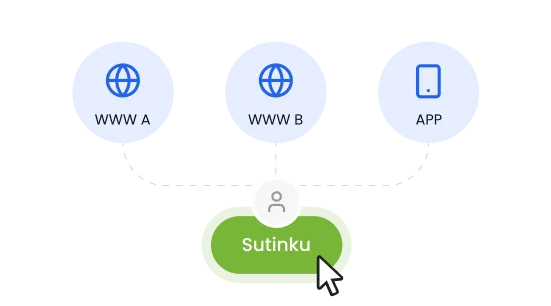
Consents work across all your websites and applications.
GDPR compliance and clear documentation across all digital spaces.
Fewer repetitive actions, clear choices, and control.
High-quality, compliant data collection for effective advertising and sustainable growth.

The largest organization for which we have implemented privacy policy management.

Consent status is synchronized across domains and applications—the user does not need to repeat his choices.


Whether the methods of cookie collection, storage, and use comply with GDPR requirements and the TCF 2.2 standard.

Whether processes are established within the organization to ensure ongoing GDPR compliance.

Whether technical solutions are properly aligned with legal requirements
GDPR audit findings are provided in writing and discussed during an individual consultation (up to 30 minutes or longer, depending on the need).
The report clearly identifies deficiencies, non-compliance with GDPR and TCF 2.2 standards, the level of risk they pose, and the recommended solutions.
On May 16, 2023, IAB Europe introduced version 2.2 of the Transparency and Consent Framework (TCF). This updated standard sets stricter requirements for how user data and consent information are collected, stored, and managed across websites and apps, helping organizations ensure full compliance with GDPR regulations.
According to official Google information, starting from March 2024, all companies using Google products in the European Economic Area must implement a Google-certified Consent Management Platform (CMP) and Consent Mode v2. Otherwise, some data collection and personalized advertising functions, including Google Analytics data collection and Google Ads campaign effectiveness, may be restricted.
These changes affect all businesses that manage websites or apps and collect any information about users in the digital space.
Required to properly understand the General Data Protection Regulation, prepare a privacy policy, and ensure that processes comply with all legal requirements.
Helps to identify and properly describe the cookies used on the website, ensuring the correct collection, storage, and management of data.
Responsible for the technical implementation of solutions on the website: the realization of consent collection, cookie management, and data transfer processes.
It is important to note that in some situations, cookies on websites may be updated more frequently—this usually depends on the third-party tools used to collect user data.
In such cases, we offer continuous GDPR compliance monitoring—we periodically check and, if necessary, update the cookie policy in accordance with the changing legal and technological environment.
| Impact / Aspect | Source + Data |
| “GDPR compliance” as a trust factor | In the Piwik PRO study “Five years into GDPR”: ~65.7% of business respondents stated that the primary motivation for complying with GDPR is user trust. https://piwik.pro/report/five-years-into-gdpr/?utm_source=chatgpt.com |
| Positive impact of GDPR on business | In the same Piwik PRO study, ~39.7% of respondents stated that compliance with GDPR has a positive impact on their business (credibility, customer trust, etc.) https://piwik.pro/report/five-years-into-gdpr/?utm_source=chatgpt.com |
| Loss of a few percent / lower traffic | In the research paper “The Impact of Privacy Laws on Online User Behavior” (Julia Schmitt, Klaus M. Miller, Bernd Skiera, 2021) – after the implementation of GDPR: a ~4.9% decrease in website visits in the short term, and ~10% in the long term. https://arxiv.org/abs/2101.11366?utm_source=chatgpt.com |
| GDPR and customer loyalty / purchases | E.g., the source “How GDPR Can Strengthen Your Customer Relationships” mentions that 77% of consumers are more likely to buy from companies that they perceive as secure / protecting personal data. https://s2wmedia.com/blog/the-trust-factor-how-gdpr-can-strengthen-your-customer-relationships?utm_source=chatgpt.com |
| It costs, but can be a competitive advantage | Piwik PRO study data: businesses consider complying with GDPR not only an obligation but also an opportunity: 75% of respondents say that adherence to privacy standards can be a business advantage. https://piwik.pro/report/five-years-into-gdpr/?utm_source=chatgpt.com |
Check independently by answering the questions below. If you are unsure of an answer or if you answer “No” to at least one question, it is likely that your cookie policy does not comply with GDPR requirements or is not properly prepared. In such a case, be sure to consult with specialists.
Do you use one of the Google-certified CMP (Consent Management Platform) platforms for cookie collection consents?
Is the SSL protocol installed on the website?
Is the Privacy Policy updated regularly on the website? Is information about the cookies used (in the Privacy Policy or Cookie Policy) constantly updated? The Privacy Policy must clearly describe what data you collect about website or app users, where and for how long you store it, and to whom and for what purpose you use it.
Was the Privacy Policy checked by a GDPR specialist during its preparation?
Is your Privacy Policy easy to find on the website?
Is there a link to the Privacy Policy in the consent form?
Are user consents registered? (You must record user consents so that during an institutional audit, you can prove that data is collected only with the user’s consent. The list of consents usually includes the user’s IP address, date, time, and choices.)
Can users easily change their consent choices and withdraw them on the website?
Is data about the user collected only when they click the consent button? (Automatic data collection simply by informing the user that by browsing the website they agree to data collection is illegal.)
Is the consent button equivalent to the rejection button? (It must not be highlighted with a different color, shape, or in other ways that encourage clicking only the consent option.)
Is there a “Disagree” / “Refuse” button if an “Accept all cookies” button is used?
Are the website’s cookies divided into categories (e.g., necessary, statistical, marketing)?
Is it possible to set consent for cookies for separate categories?
Are the selectable cookie categories not pre-checked? (The user’s choice must be completely free.)
Is the entire website (not just the homepage) checked periodically, at least once a month, for cookie changes?
Do you perform a procedure in your business or organization that ensures the Privacy (Cookie) Policy will be updated in time when cookies change?
When preparing the Privacy Policy and implementing the consent management tool, did you take into account the legal environment of all countries where you sell products? (The website must comply with legal requirements in every market.)
Are the Privacy Policy and cookie consent panel provided in all languages of the website?
If third-party advertisements are hosted on the website, is information about advertising partners provided to the user before consent is given? (The TCF 2.2 standard defines what information must be provided.)
Example 1: Violation of Consent for Data Collection
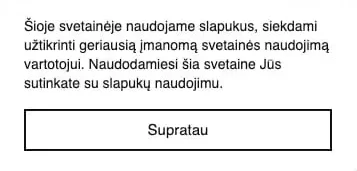
This example violates the fundamental principles of consent. The data subject’s consent must be given freely and, regardless of the choice, must not restrict the subject’s right to use basic services (except for certain exceptions). In this case, the website visitor is not given the opportunity to browse the website if they do not agree to certain cookies. Furthermore, this website uses statistical cookies that are not essential for the website’s functionality. Such cookies require the user’s explicit consent. Additionally, the consent form does not provide links to the Cookie and/or Privacy Policy. This means that the user’s “consent” in this case cannot be considered informed. The user is also not informed where and for what purposes their data will be used.
Example 2: Pre-selected Consent
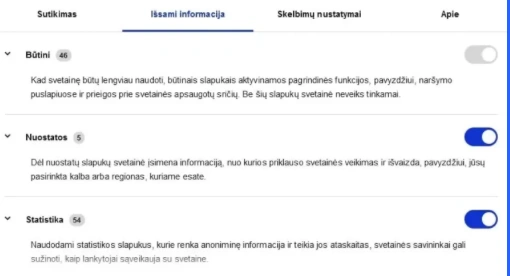
In this example, we see that the user is not allowed to make their own choice; instead, the choices are pre-checked. According to GDPR and its supplementary legal acts, user consent cannot be influenced, therefore pre-checked boxes are not considered freely given consent.
Example 3: Influencing User Decision-making
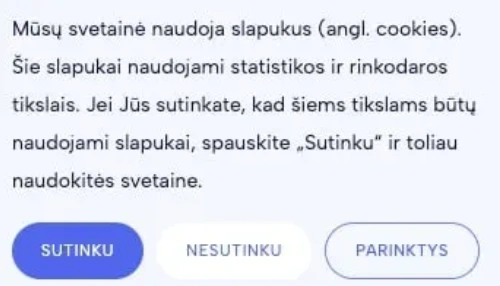
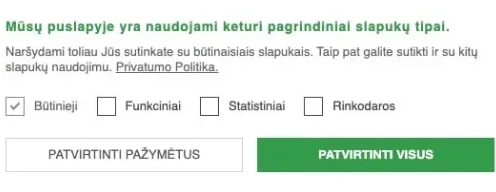
In these examples, the same rule is violated. They influence the user’s choice. According to legal acts and the standard, choices must be presented as equivalent and not distinguished from others by different colors or other methods.

The example below violates the principle of equivalence—if the user is offered the option to “accept all,” they must also be given the choice to “reject all” or “accept only necessary.”
J. Urbsio st. 3, LT-35190 Panevezys, Lithuania
Gedimino pr. 9, LT-01103 Vilnius, Lithuania

© {current_year} – RAIBEC | Be efficient online – digital marketing. All rights reserved.